Parallel nitrogen generators
Define load sharing and rotation so production and maintenance can coexist.
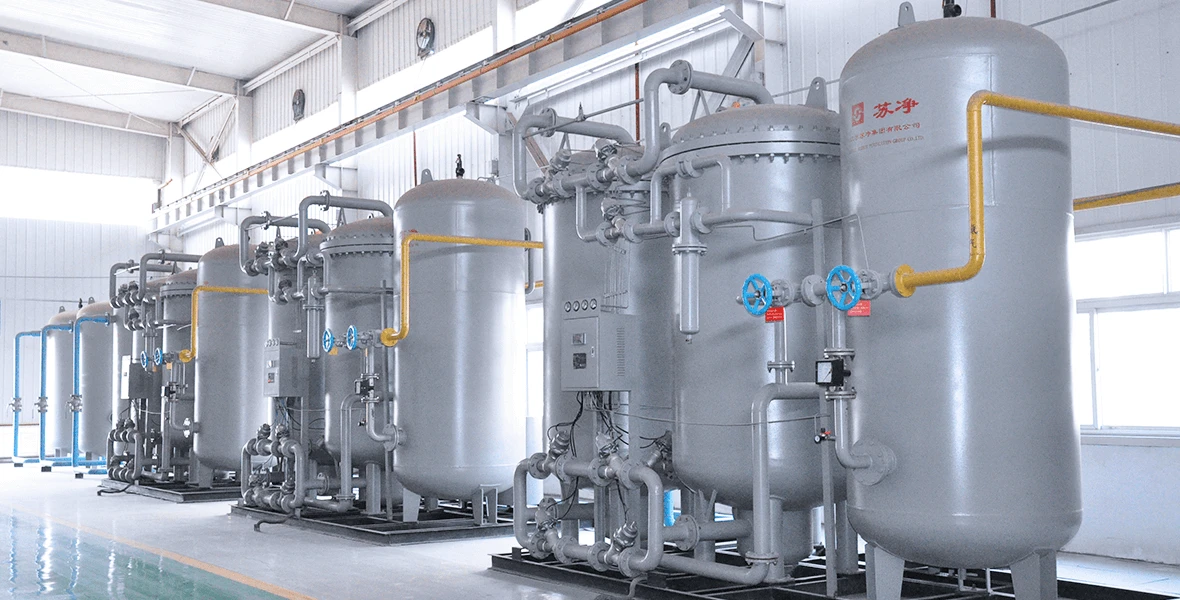 Manufacturer reference photo · sjjq.com
01Define the operating duty
Establish whether parallel operation increases flow, covers shifts or permits servicing of one unit. These goals affect sizing and shared utilities. Adding nameplate ratings does not establish usable output at the required purity.
- Demand input: Purpose of parallel operation
02Connect the complete system
Define startup order, duty rotation, pressure control and off-specification isolation. Check non-return arrangements and common buffering. Units from different batches need compatible communications, purity settings and analyzer responses for coordinated control.
- Interface input: Single-unit maintenance plan; Common buffering
03Verify the configuration
Test single, partial and full operation, including recovery after a unit is removed. Include low-load efficiency and maintenance labor in cost comparisons. Duty rotation should distribute operating hours to support maintenance planning.
This topic supports configuration discussions. Equipment combinations and availability are subject to technical confirmation and contract. The fields below are project inputs, not committed performance specifications.
- Verification input: Startup and duty-rotation rules
Selection conditions to confirm
| Item | Requirement / confirmation basis |
|---|---|
| Purpose of parallel operation | Confirm for the projectProvide actual process conditions and the measurement basis. |
| Single-unit maintenance plan | Confirm for the projectSpecify normal values, peaks or the permitted range. |
| Common buffering | Confirm for the projectCheck against existing equipment and site conditions. |
| Startup and duty-rotation rules | Confirm for the projectAgree the acceptance basis during technical review. |
These public references explain general technology. They do not establish AIDEKE model performance, a supply commitment or a third-party endorsement. The article is an independent editorial explanation; the confirmed technical agreement governs a specific project.
Sources and usage notes